

A unified design style can completely transform the way your home feels. When your rooms relate to each other through repeated colors, finishes, shapes, and textures, the entire space feels calmer, more intentional, and more enjoyable to live in. Many homeowners struggle with cohesion because homes are often decorated over time, piece by piece, and the result can feel visually fragmented. The good news is that cohesion does not require every room to look identical. Instead, it requires thoughtful choices, consistency, and a clear vision of the overall mood you want your home to express.
Creating this flow begins with understanding how colors, materials, layout, furniture, and architectural details work together. Once you identify a central theme or guiding design vocabulary, it becomes much easier to incorporate new elements that feel aligned with your home rather than competing with it.
Below, we’ll explore how to establish a cohesive style across your entire living space—whether you’re updating one room at a time or planning a whole-home redesign. By using intentional design principles, you can turn multiple individually decorated rooms into one beautifully connected environment.

Start With a Clear Vision of Your Preferred Design Style
A cohesive home begins with clarity. Instead of thinking room by room, think about the whole house as one complete expression. Ask yourself questions that help reveal the style you naturally gravitate toward:
- Do you prefer clean lines, open spaces, and minimal ornamentation?
- Are you drawn to natural materials like stone, wood, and woven textures?
- Do you love bold colors and patterns, or do you prefer neutrals and simplicity?
- Which design styles feel most comfortable—modern, traditional, transitional, farmhouse, bohemian, or something else?
Once you can articulate the style you love, the next step is defining the specific mood you want your home to evoke: cozy, calm, energizing, elegant, rustic, serene, luxurious, or vibrant.
Keeping these guiding concepts in mind will influence your color choices, material selections, furnishings, and even the types of lighting you incorporate.
A clear design direction makes decisions easier and prevents you from selecting pieces that feel out of place. It also ensures that each room feels related, even if the function of each space is different.
Choose a Whole-Home Color Palette Before Decorating Any Room
Color is one of the most powerful tools for cohesion. Selecting a unified palette before you start decorating helps ensure consistency, even if each room uses the palette in different ways.
Designers often recommend:
- One dominant neutral is used throughout the home (white, beige, taupe, gray, or a soft, earthy tone).
- Two to three coordinating accent colors that appear in décor, textiles, and artwork.
- A few deeper shades are used strategically for visual contrast.
Consistency does not mean matching every room. Instead, it means carrying a color theme across multiple areas in subtle ways. For example, if navy is an accent color, it might appear as throw pillows in the living room, tile in the bathroom, or bar stool fabric in the kitchen.
This method creates harmony without repetition. You retain variety, but the eye still recognizes the intentional thread that ties the entire home together.
Color even influences the perceived size and flow of your home. When wall colors shift drastically from one room to another, transitions can feel abrupt or disruptive. Using related shades softens those transitions and allows rooms to flow naturally from one space to the next.
While exploring cohesive color palettes, many homeowners also begin planning broader upgrades. During this process, they may consult window contractors when refreshing trims, glass packages, or frames to better complement the new style direction.
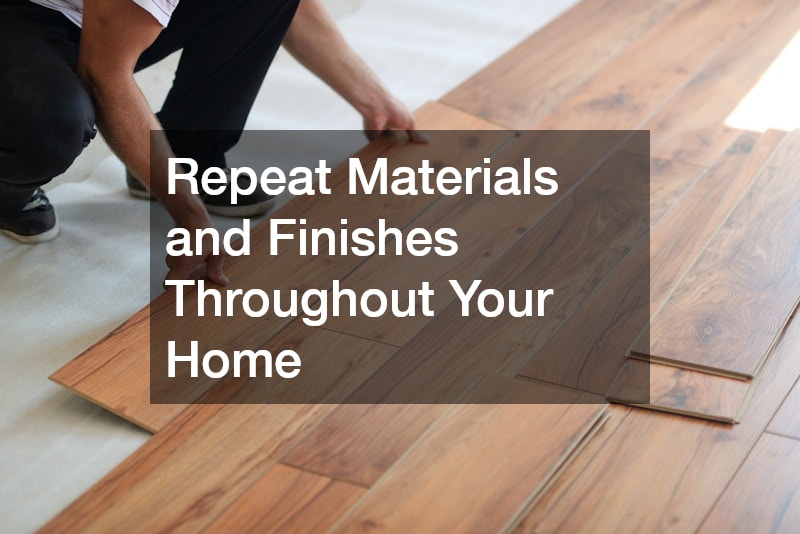
Repeat Materials and Finishes Throughout Your Home
Another powerful way to achieve cohesion is to repeat certain materials or finishes across multiple rooms. Humans naturally perceive repeated elements as unified, making your home feel thoughtfully curated.
Consider repeating:
- Wood tones (light oak, walnut, espresso, driftwood)
- Metal finishes (brushed nickel, matte black, brass, polished chrome)
- Stone textures (marble, granite, slate, quartz)
- Upholstery fabrics (linen, performance fabric, leather, boucle)
Repeating these materials doesn’t restrict variety—it enhances it. For example, matte black hardware in the kitchen can connect seamlessly with matte black bathroom fixtures or black-framed windows in the living room. Matching wood species in floating shelves, flooring, and furniture adds warmth and familiarity.
You can also tie spaces together by repeating architectural details such as trim profiles, paneling styles, ceiling beams, arch shapes, or decorative moldings.
Some homeowners choose to elevate their storage by adding custom cabinets, which allow them to match finishes across rooms while optimizing organization. Consistent cabinetry style—whether shaker, flat-panel, or inset—strengthens the visual flow of the entire home.
Use Lighting to Create a Unified Mood
Lighting is often overlooked as a major design connector. A cohesive home uses lighting intentionally to create a flow of brightness, warmth, and ambiance from one room to the next.
There are three main types of lighting to consider:
- Ambient lighting: the overall illumination of a room
- Task lighting: functional lighting such as under-cabinet lights or desk lamps
- Accent lighting: decorative illumination to highlight artwork, shelving, or architectural elements
Using similar color temperatures throughout your home is crucial. Mixing warm and cool lighting creates disjointed spaces. Warm white lighting, often around 2700K to 3000K, feels welcoming and consistent.
Coordinate lighting fixtures in complementary finishes or matching silhouettes. For example, a brushed bronze chandelier in the dining room pairs beautifully with brushed bronze pendants in the kitchen and bronze sconces in the hallway.
During these updates, homeowners sometimes address needed system improvements, such as scheduling HVAC repair services to maintain a comfortable interior climate that supports their newly enhanced lighting and design choices.

Connect Rooms Through Flooring for Seamless Flow
Flooring plays a huge role in how unified your home feels. When each room has different flooring, transitions feel abrupt and visually disruptive.
To maximize cohesion:
- Use the same flooring throughout as many areas as possible.
- If changes are necessary, choose materials in related tones or textures.
- Avoid strong pattern changes between adjacent spaces.
Hardwood and luxury vinyl plank are popular for their ability to create smooth, whole-home continuity. Tile works well in bathrooms, laundry rooms, and kitchens, but selecting styles that relate visually to the main flooring helps maintain flow.
If you are considering an upgrade, many homeowners consult the best flooring companies to identify materials that support both durability and aesthetic harmony.
Area rugs can also be used intentionally to reinforce cohesion. Rather than matching, choose rugs that share color families or patterns that complement each other.
Unify Your Home With Repeated Shapes and Silhouettes
Beyond color and material, shape also influences design cohesion. When shapes recur throughout your home, the eye perceives order and balance.
Identify shapes you love—round, angular, curved, linear—and use them intentionally in:
- Lighting fixtures
- Mirrors
- Table edges
- Architectural details
- Furniture silhouettes
- Artwork
For example, a home that features circular mirrors, rounded dining chairs, curved sofas, and arched doorways will feel harmonious even if each item varies in color or material.
Conversely, if your design style leans toward clean lines, square edges, and sharp angles, repeating those geometric elements creates a more modern, structured look.
Shape repetition is subtle but powerful, and it helps your home feel as though it was designed all at once, even if improvements occur over time.

Incorporate Architectural Consistency Across Rooms
Architectural cohesion builds the strongest design foundation possible. While each room serves a different function, repeating architectural elements creates a smooth connection between them.
Examples include:
- Matching baseboard or crown molding profiles
- Using consistent door styles and hardware
- Installing the same window trim throughout
- Aligning ceiling beam styles
- Using similar paneling or wainscoting patterns
- Carrying arch or column shapes into multiple rooms
Even small details like vent covers, hinges, interior door handles, or stair banister finishes contribute to your overall style.
If your exterior is undergoing upgrades—such as vinyl siding installation to modernize curb appeal—mirroring some of your exterior color choices or materials indoors can create whole-property cohesion.
Improving or updating architectural features does not have to involve major construction. Many changes can be subtle yet incredibly impactful.
Balance Variety and Repetition for a Harmonious Look
A cohesive home does not mean every room looks identical. Variety is essential. The right balance makes your home feel interesting but still aligned.
Here’s how to combine variety and repetition:
- Use your whole-home color palette, but highlight different shades in different rooms.
- Repeat a metal finish in lighting, but mix in another metal for décor.
- Maintain similar furniture silhouettes while varying fabrics or colors.
- Use consistent flooring but introduce room-specific area rugs.
- Add complementary artwork styles rather than identical pieces.
Think of it like a family photo: each person is different, but you can tell they belong together.
Finding this balance becomes easier once you identify your home’s guiding aesthetic. Whether your style is coastal, Scandinavian, industrial, or classic, your variations should still reflect the same overarching theme.
During updates, some homeowners enhance curb appeal by coordinating exterior design elements with interior themes. When refreshing the outside of the home, they may rely on a local roofer service to help select roofing materials that harmonize with the home’s interior color story.
Use Furniture Arrangement to Maintain Visual Flow
The way furniture is arranged significantly affects how cohesive your home feels. Open pathways, coordinated layout principles, and repeated spacing patterns can support smoother transitions from room to room.
Consider:
- Aligning sightlines so views between rooms feel intentional
- Keeping furniture proportions consistent across spaces
- Using matching or complementary scales for large pieces
- Ensuring color placement flows through visible areas
If your home has an open floor plan, furniture placement becomes even more important. Spaces should feel distinct yet connected. For example, if your living room features soft neutrals, your dining room—visible from the same area—should incorporate related tones to avoid clashing.
Homeowners making physical adjustments to their layout may also address exterior functional improvements, such as scheduling garage door repairs to support the home’s overall usability and curb appeal, which indirectly enhances the continuity between exterior and interior spaces.
Tie Spaces Together With Artwork and Decorative Elements
Accessories often determine whether your home feels cohesive or chaotic. By intentionally choosing décor that relates across rooms, you strengthen the visual harmony of the home.
You can repeat:
- Artwork styles or color palettes
- Frame materials
- Vase or sculpture shapes
- Textile patterns
- Decorative tray or bowl finishes
- Book styling techniques on shelves
Rather than purchasing random décor items over time, select pieces that complement your guiding design vision.
Accent décor also provides an opportunity to incorporate personality into your space. Even highly curated homes benefit from unique, meaningful pieces—they just need to fit within your aesthetic framework.
Similarly, when improving outdoor spaces, homeowners sometimes coordinate landscaping upgrades with indoor design. During those outdoor enhancements, they may work with a professional tree service to shape or remove vegetation that affects the home’s exterior appeal and overall style alignment.
Enhance Storage Solutions for a Cleaner, More Unified Aesthetic
Clutter disrupts cohesion faster than any other factor. Even the most beautifully designed rooms feel chaotic when surfaces are overcrowded or storage is inadequate.
Smart storage choices—especially built-in solutions—help maintain a streamlined appearance. Options include:
- Built-in shelving
- Hallway cabinets
- Under-stair storage
- Large closet systems
- Organized kitchen and bathroom cabinetry
- Wall-mounted storage in living areas
When storage is functional and personalized, daily living feels easier and the home looks far more polished. Many families choose custom-built storage to ensure every item has a place.
During these upgrades, homeowners may also rely on local plumbers for safe rerouting of pipes if custom storage or built-ins require adjustments around plumbing lines.
Customized storage is a powerful way to blend function with design, creating a unified feel across every room.
Use Textiles Thoughtfully to Strengthen Whole-Home Cohesion
Textiles—including rugs, curtains, pillows, blankets, and upholstery—contribute significantly to your design story. They offer opportunities to reinforce color themes, introduce texture, and create softness throughout the home.
Consider:
- Choosing fabrics within the same color family
- Repeating textures such as linen, boucle, bamboo, or leather
- Mixing patterns thoughtfully (geometrics, stripes, or organic prints)
- Using similar window treatments in rooms that align visually
Textiles can also help transition from one room to another. For example, a patterned rug in the living room may share one or two colors with a patterned pillow in the adjacent dining area.
Keep in mind that textiles often need refreshing over time. During seasonal updates or renovations, some homeowners take the opportunity to replace gutters to protect the home’s exterior. These improvements may be handled by a gutter replacement service, which ensures the exterior stays functional and visually connected to the updated interior design.
Incorporate Nature-Inspired Elements for Added Unity
Natural elements—wood, stone, plants, water features, and natural fabrics—bring an organic sense of unity to interiors. Nature tends to be cohesive by default, so adding organic materials creates warmth and continuity.
You can introduce natural elements by using:
- Houseplants
- Woven baskets
- Jute or sisal rugs
- Stone vases or bowls
- Wood furniture or beams
- Linen and cotton fabrics
The repetition of natural textures makes your entire home feel more grounded and serene.
Biophilic design, which emphasizes the integration of nature into living spaces, is also gaining popularity. Homes that use nature-inspired design elements feel healthier, calmer, and visually connected from room to room.
Consider Sightlines and Adjoining Spaces
If you stand in the living room and can see into the kitchen, dining room, and hallway, everything visible should feel intentional. Sightlines play a dramatic role in perceived cohesion.
To enhance flow:
- Align focal points in adjoining rooms.
- Ensure visible wall colors complement each other.
- Coordinate furniture heights and materials.
- Maintain balanced lighting levels across connected areas.
If one space feels much darker or heavier than another, the difference can disrupt your overall style harmony.
Many homeowners address exterior issues that affect interior sightlines, such as a deteriorating garage door or noisy mechanical components. During these enhancements, some choose to consult professionals offering garage door repairs to ensure even the most functional elements support the aesthetic experience.
Use Statement Pieces Strategically, Not Excessively
A cohesive home should still have personality. Statement pieces—such as chandeliers, artwork, bold furniture, or sculptural décor—create interest and prevent your home from feeling overly uniform.
However, using too many statement pieces creates visual noise and disrupts cohesion.
A useful rule is to include one major statement element per room, with smaller accents that relate to it.
For example:
- A bold chandelier pairs wonderfully with subtle dining chairs.
- A large piece of wall art can anchor a living room while the remaining décor stays muted.
- A richly patterned rug pairs well with solid, neutral furniture.
When used thoughtfully, statement elements build character while preserving overall style continuity.
Evaluate Your Home Room by Room to Strengthen Cohesion
Walk through your home slowly and observe how each room connects visually to the next. Ask yourself:
- Does anything look out of place?
- Are there mismatched materials or finishes?
- Do colors flow smoothly across spaces?
- Does the furniture scale make sense when rooms are viewed together?
- Are decorative styles consistent?
Room-by-room analysis helps identify areas that disrupt cohesion, allowing you to adjust or replace items that no longer support your design vision.
Some homeowners conduct this assessment while also planning exterior updates. For instance, during major home improvement planning, families may schedule gutter replacement service to help balance form and function while maintaining the property’s exterior consistency with its interior design style.
Don’t Forget the Exterior When Creating a Cohesive Style
Cohesion begins outside the home. The exterior design sets expectations for what someone will see inside. When the exterior and interior do not relate, the transition feels disjointed.
To enhance alignment:
- Choose exterior colors that complement your interior palette.
- Coordinate landscaping with your home’s architectural style.
- Use similar materials indoors and outdoors, such as natural stone or wood accents.
- Ensure your front entryway reflects your overall aesthetic.
Exterior projects may involve roofing, windows, siding, or landscaping changes. Many homeowners partner with professional services, such as a local roofer service, to select exterior finishes that align seamlessly with their interior style direction.
By creating harmony between the exterior and interior, your home feels complete and well considered.
Creating a cohesive design style throughout your home is both an art and a thoughtful process. While each room serves a distinct purpose, the goal is to create subtle visual connections that guide the eye naturally from one space to another. Cohesion does not require uniformity; instead, it thrives on intentional repetition, balanced variety, a unified color palette, complementary materials, and consistent architectural and decorative details.
As you update your home, your design vision becomes easier to maintain. Whether you redecorate room by room or transform your entire property at once, grounding your decisions in a unified aesthetic ensures that every space feels like part of a harmonious whole. With careful planning and a clear guiding style, your home can become a beautifully connected environment that supports comfort, beauty, and long-term enjoyment.